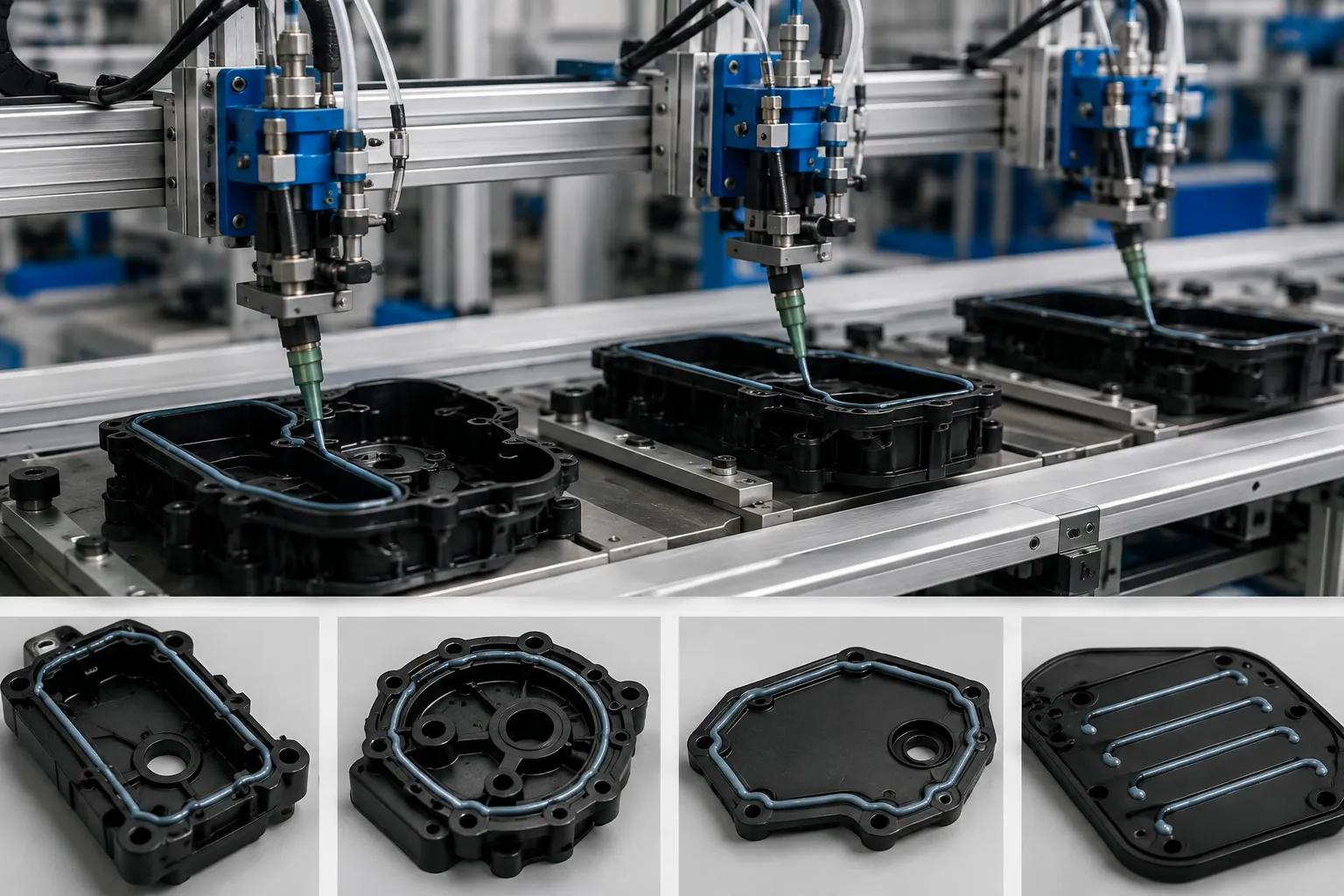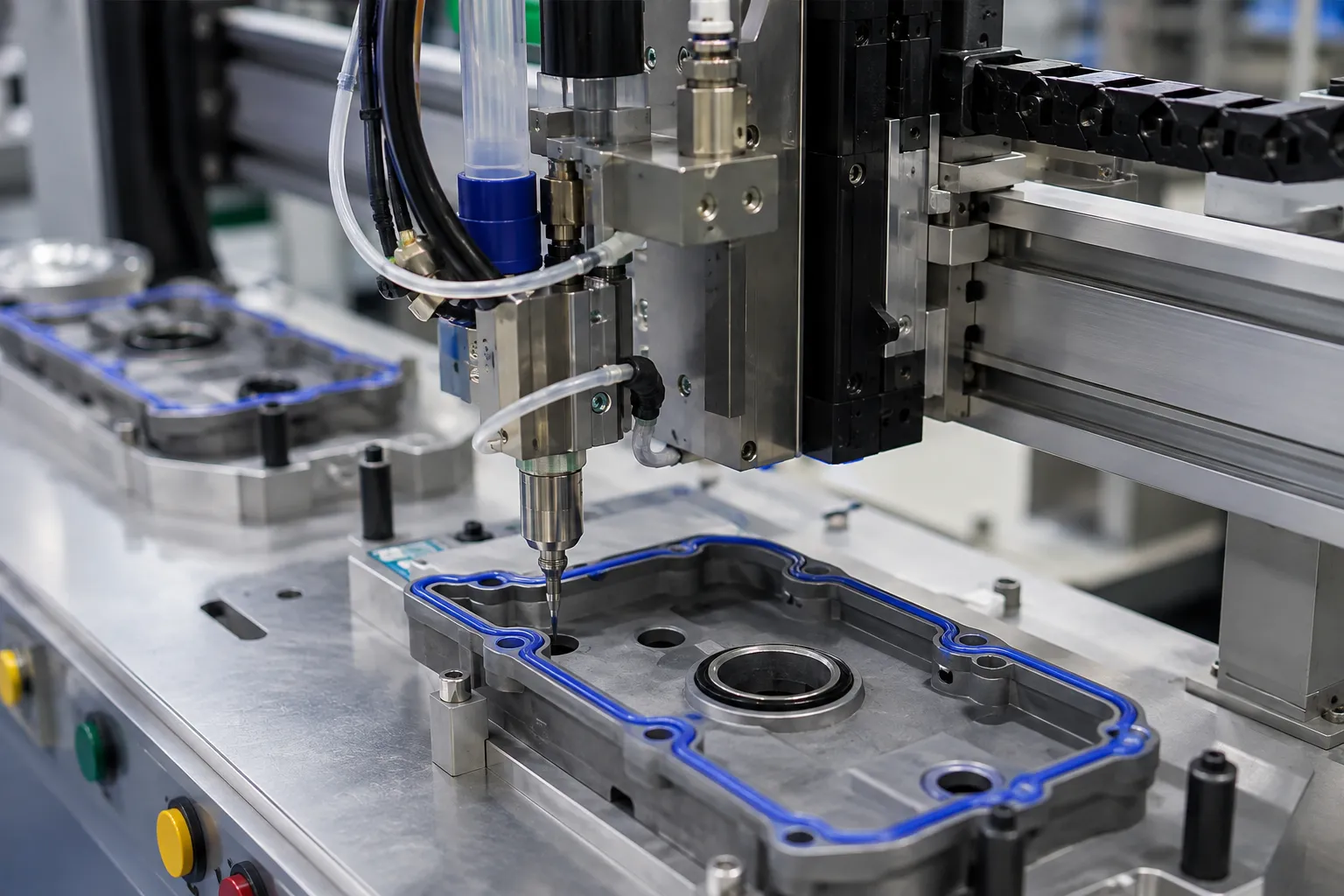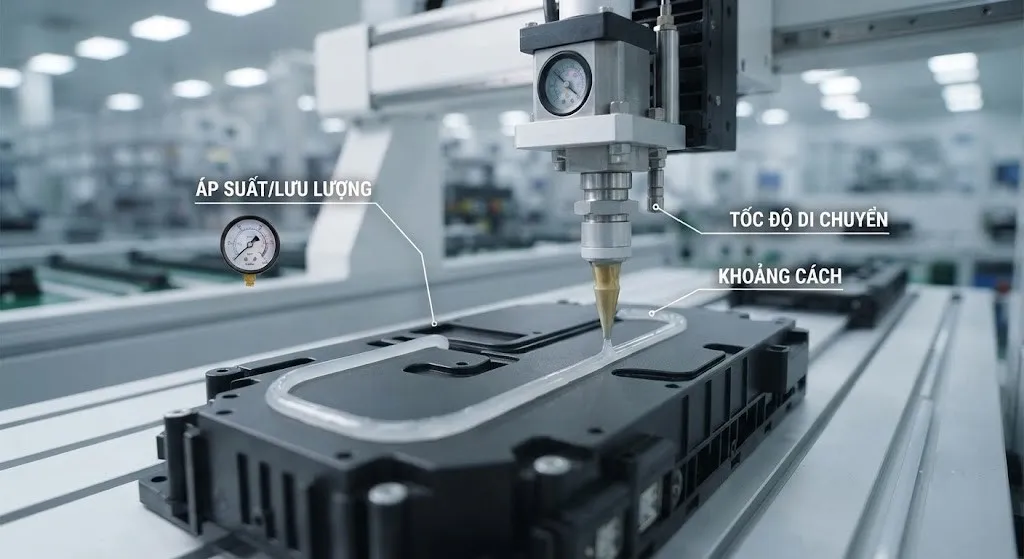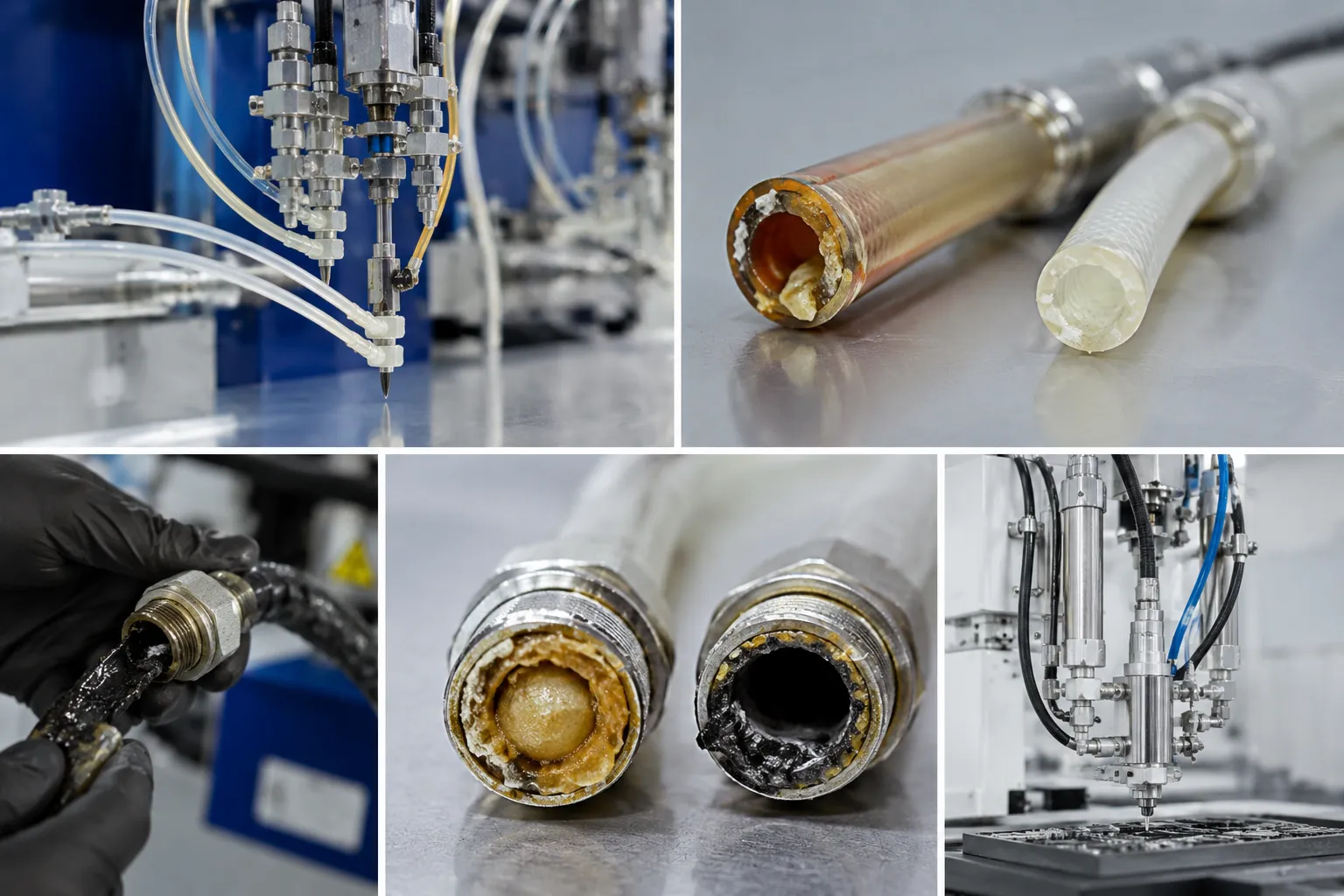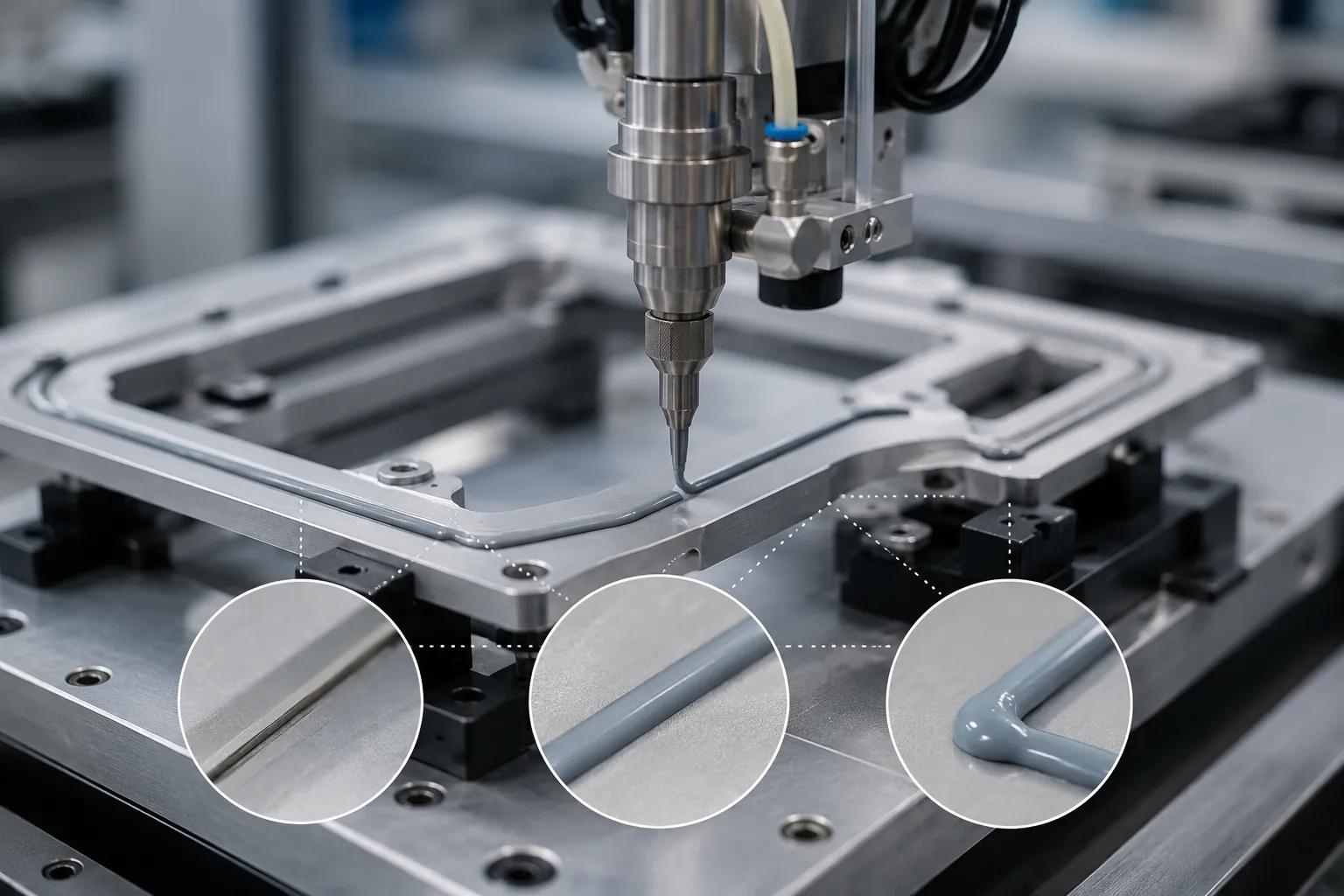



Electronic dispensing machines are essential equipment in modern manufacturing lines, especially in industries that demand high precision, such as electronics, automotive, new energy batteries, medical devices, and home appliances. These machines accurately control the dispensing volume of adhesive materials, maintain consistent product quality, reduce adhesive waste, and improve overall production efficiency.As manufacturers continue to embrace automation, solutions such as glue dispensing machines, adhesive dispensing machines, automatic glue applicators, Dispensing Machines, and Dispensing Systems are gradually replacing manual dispensing methods thanks to their outstanding accuracy, stable performance, and reliable operation. AMC as we take an in-depth look at today's most common types of electronic dispensing machines, how they are classified, and the key factors manufacturers should consider when selecting the most suitable dispensing solution based on material characteristics, production scale, and long-term investment objectives.
1. Why are electronic dispensing machines becoming increasingly popular?
The rapid growth of industrial automation has made electronic dispensing machines indispensable equipment in modern manufacturing facilities. As electronic components continue to become smaller while quality requirements become increasingly demanding, manual adhesive dispensing can no longer provide the precision, consistency, or productivity required by today's manufacturing standards.
For materials such as silicone, epoxy adhesives, thermal interface materials (TIM), lubricating grease, and sealants, the dispensing process requires stable pressure, accurate flow control, and minimal air entrapment. These are precisely the challenges that automatic dispensing systems address far more effectively than manual operations. In addition to improving product quality, electronic dispensing machines help manufacturers reduce adhesive consumption, lower labor costs, minimize production downtime, and integrate seamlessly with industrial robots, conveyor systems, and other factory automation equipment. As a result, these machines are no longer simply production tools—they have become strategic investments that enhance manufacturing efficiency and strengthen long-term competitiveness.
2. How are electronic dispensing machines classified?
Electronic dispensing machines are available in a wide range of configurations designed to meet different manufacturing processes and application requirements. Therefore, there is no single universal classification standard. In practice, engineers typically evaluate and select dispensing equipment based on several factors, including machine structure, dispensing technology, material characteristics, and the automation level of the production line.
From the perspective of machine structure and motion systems, today's market mainly offers Desktop Dispensing Robots, Gantry Dispensing Robots, and Inline Dispensing Systems. Each type is designed for different production scales, ranging from research laboratories and small-batch manufacturing to fully automated continuous production lines.
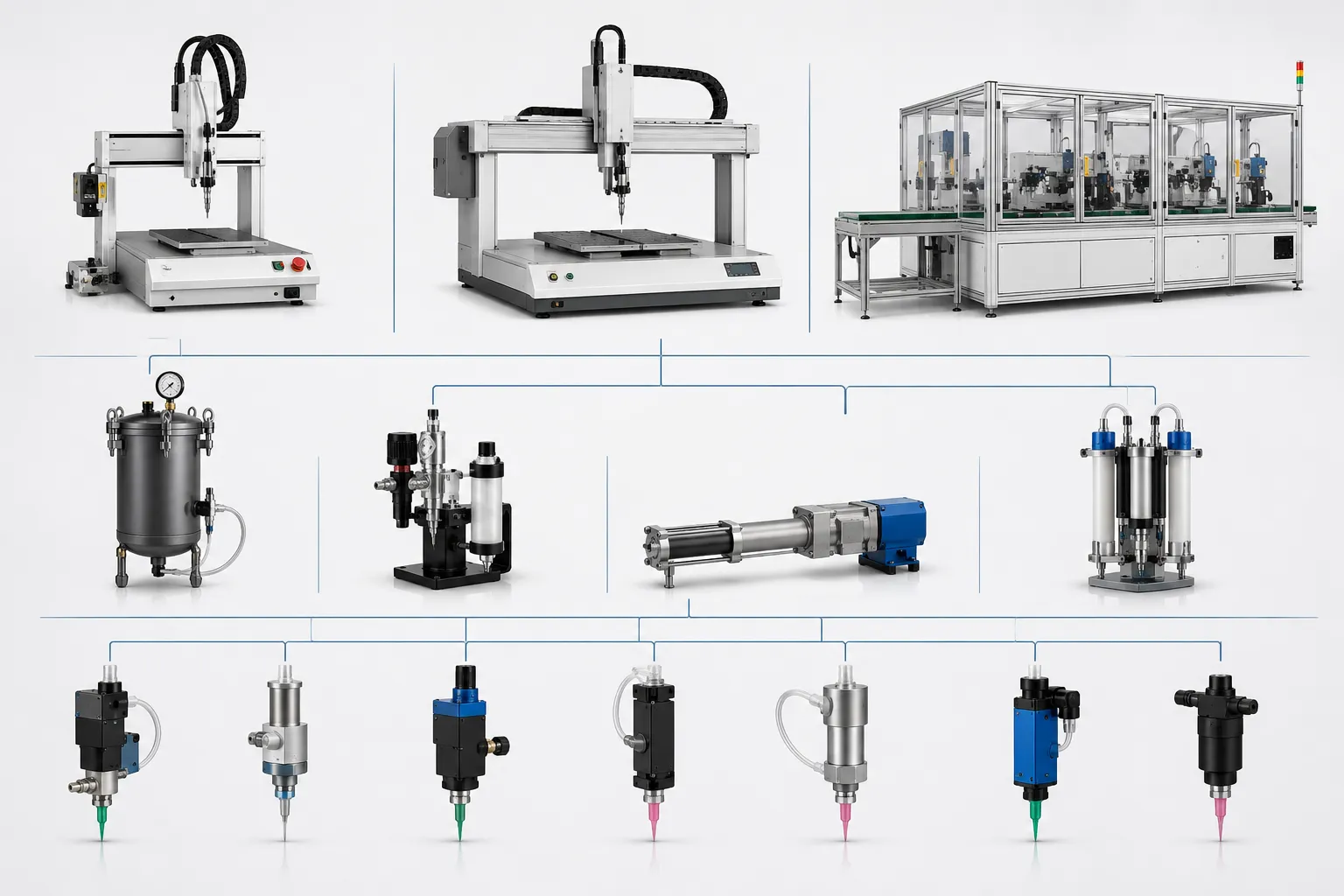
In terms of dispensing and metering technology, glue dispensing machines may utilize pressure tanks, piston pumps, progressive cavity pumps (screw pumps), or Two-Component Dispensing Systems (2K Dispensing Systems). Each technology offers unique advantages in dispensing accuracy, production speed, and compatibility with different adhesive materials. Material characteristics are equally important when determining the appropriate machine configuration. High-viscosity materials such as silicone, epoxy, and thermal interface materials (TIM) generally require piston pumps or progressive cavity pumps to maintain stable flow rates throughout the dispensing process. Meanwhile, the dispensing valve directly determines adhesive dot size, bead profile, and anti-drip performance. A properly matched combination of pump and dispensing valve helps minimize common dispensing defects such as stringing, air bubbles, and inconsistent adhesive volume.
In addition, adhesive dispensing machines can also be classified according to their level of automation. Semi-automatic systems are ideal for manufacturers that frequently change product models and require greater production flexibility, while fully automated Dispensing Systems integrated with industrial robots, vision cameras, positioning systems, and conveyor lines are better suited for high-volume manufacturing where both speed and process stability are critical. Understanding these classification methods enables manufacturers to select the right dispensing solution from the very beginning, avoiding unnecessary investment in equipment that is unsuitable for their materials or production process while maximizing long-term operational efficiency and reducing overall operating costs.
3. Common types of electronic dispensing machines
3.1. Desktop dispensing robot
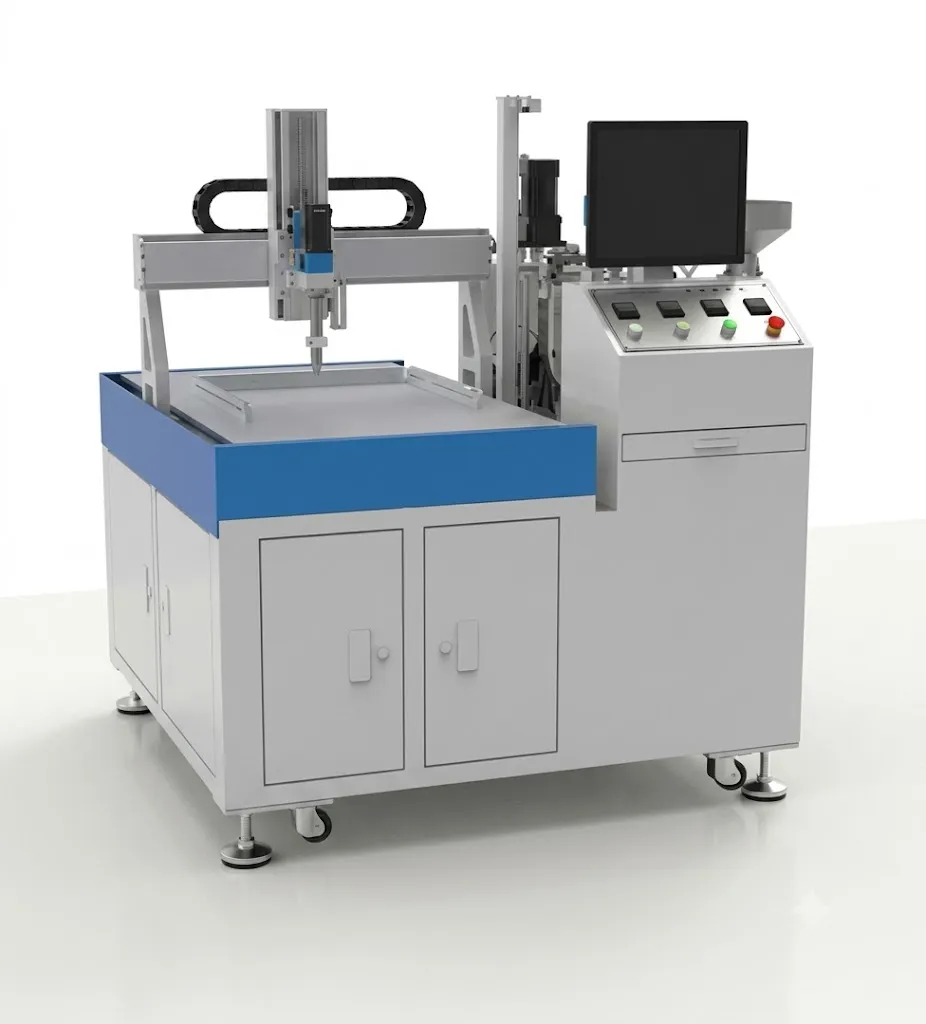
The Desktop Dispensing Robot is one of the most widely used electronic dispensing machines among small and medium-sized manufacturers, research and development (R&D) laboratories, and production lines that frequently introduce new product models. Equipped with an X-Y-Z motion system and a programmable controller, the machine accurately positions the dispensing valve according to predefined dispensing paths.
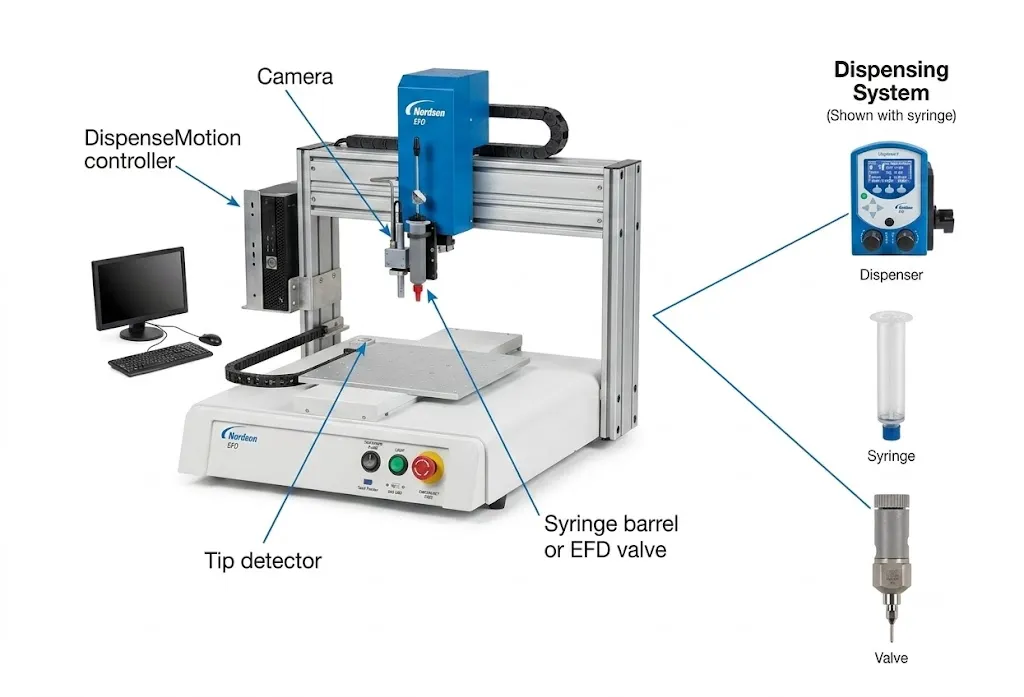
Their reasonable investment cost, ease of programming, and user-friendly operation have made them a popular choice for manufacturing PCBs, LED modules, camera modules, sensors, and many other compact electronic components. Desktop dispensing robots are particularly suitable for manufacturers that require flexible production, frequent product changes, and precise adhesive application without the complexity of fully automated production lines.
3.2. Gantry Dispensing Robot
A Gantry Dispensing Robot is an ideal solution for dispensing applications involving large workpieces or products that require adhesive to be applied at multiple locations. Thanks to its rigid frame structure and large working envelope, the system can efficiently process battery modules, display panels, automotive glass, electrical cabinets, and various large mechanical components.
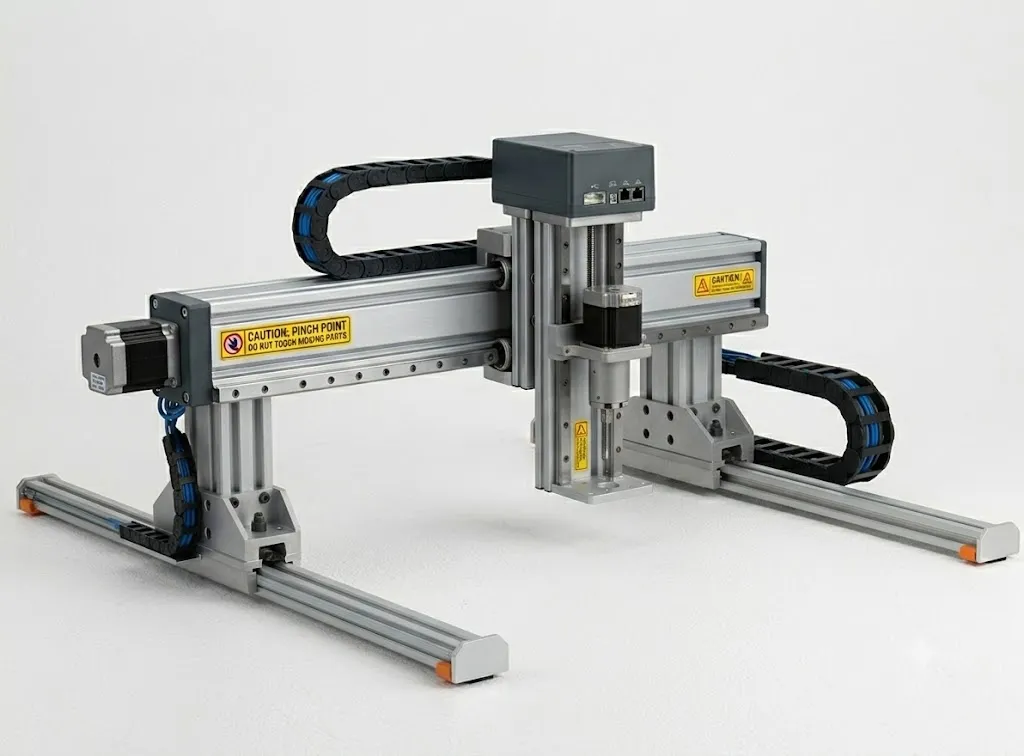
One of the key advantages of gantry dispensing robots is their ability to maintain high positioning accuracy across the entire working area. In addition, these systems can be easily integrated with CCD vision systems, laser sensors, and automatic product recognition technologies to further improve dispensing quality and production consistency. As a result, gantry dispensing robots are widely adopted by manufacturers in the electronics and automotive industries where both high precision and high productivity are essential.
3.3. Inline dispensing machine
For high-volume manufacturing environments, Inline dispensing machines offer outstanding production efficiency by operating continuously alongside conveyor systems. Integrated directly into automated production lines, these machines allow products to move automatically through the dispensing process without requiring manual handling.
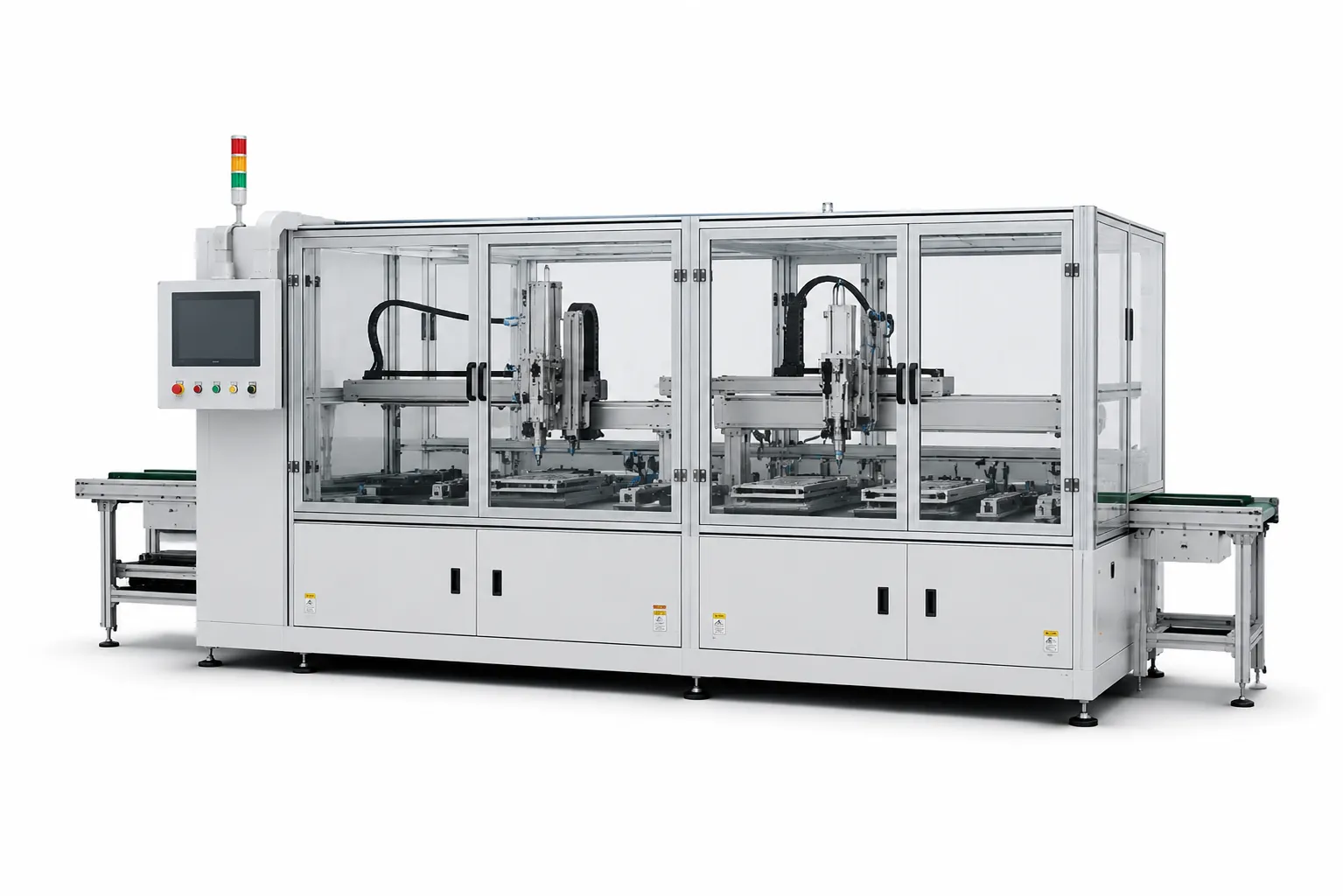
Beyond precise adhesive dispensing, many modern inline systems are equipped with advanced features such as automatic bead inspection cameras, automatic nozzle cleaning systems, and connectivity with Manufacturing Execution Systems (MES) or factory management software. These capabilities enable manufacturers to maintain consistent product quality, shorten production cycle times, and meet the demands of large-scale manufacturing while reducing labor requirements and improving overall production efficiency.
3.4. Two-Component Dispensing Machine
For two-component materials such as AB epoxy, polyurethane, and two-part silicone, maintaining the correct mixing ratio is critical to achieving proper curing performance and bond strength. A Two-Component Dispensing Machine is specifically designed to automatically meter, mix, and dispense both components within a single process, significantly reducing human error compared with manual mixing methods.
These dispensing systems are widely used in battery manufacturing, automotive production, electronics assembly, and other industrial applications that require high-strength bonding, excellent material consistency, and reliable curing performance. In addition to improving product quality, automatic two-component dispensing systems help manufacturers minimize material waste, optimize adhesive consumption, and ensure consistent production quality across different manufacturing batches.
3.5. Vacuum Dispensing systems and Jet Dispensing technology
For ultra-high-precision applications such as semiconductor packaging, camera module assembly, and medical device manufacturing, advanced dispensing technologies including Vacuum Dispensing and Jet Dispensing are becoming increasingly popular. Vacuum dispensing systems remove trapped air from dispensing materials before application, making them particularly suitable for silicone adhesives and thermal interface materials where air bubbles can significantly affect product quality and thermal performance.
Meanwhile, Jet Dispensing technology utilizes a high-speed jet valve to dispense adhesive without requiring the nozzle to physically contact the workpiece. This non-contact dispensing method significantly increases production speed, reduces the risk of damaging delicate components, and ensures highly consistent adhesive dots and beads even on extremely small or densely populated electronic assemblies. Thanks to these advantages, Vacuum Dispensing and Jet Dispensing technologies are increasingly being adopted in industries where maximum dispensing accuracy, high-speed production, and superior product quality are essential.
4. Key criteria for choosing the right Electronic Dispensing Machine
Investing in an electronic dispensing machine is not simply a matter of choosing equipment at the right price. Manufacturers should evaluate dispensing solutions based on material characteristics, technical requirements, production objectives, and future automation plans. Selecting the right dispensing system from the beginning helps maintain consistent product quality, reduce maintenance costs, and maximize long-term return on investment.
The first and most important factor to consider is the characteristics of the dispensing material. Every adhesive has different viscosity, curing behavior, filler content, and chemical properties, which require different dispensing technologies. For high-viscosity materials such as silicone, thermal interface materials (TIM), and highly filled adhesives, manufacturers should prioritize piston dispensing pumps or high-pressure adhesive pumps to ensure stable flow rates and consistent dispensing performance. On the other hand, applications requiring highly accurate low-volume dispensing may be better suited to progressive cavity pumps or other precision metering systems.
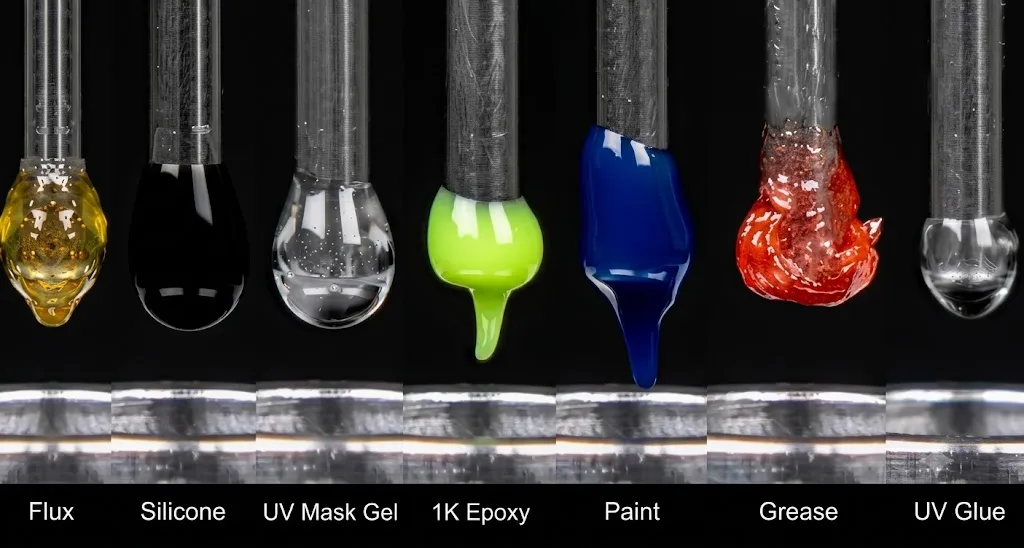
The next consideration is dispensing accuracy and production capacity. For products with miniature dimensions or applications requiring highly consistent adhesive beads—such as PCBs, LED modules, and electronic components, manufacturers should select dispensing machines capable of delivering excellent repeatability and precise flow control. For high-volume manufacturing environments, it is advisable to choose dispensing systems that can operate continuously and integrate easily with conveyor systems, industrial robots, and other automated production equipment.
Ease of maintenance and component replacement should also be carefully evaluated. Equipment designed with a simple structure and convenient access for replacing seals, pistons, dispensing valves, or dispensing needles can significantly reduce maintenance time and minimize production downtime. In addition, manufacturers should choose suppliers capable of providing professional technical consultation, readily available spare parts, and comprehensive after-sales service to ensure long-term operational reliability.
Overall, selecting the right dispensing machine depends on several key factors, including adhesive type, production volume, dispensing accuracy requirements, and the desired level of automation. Desktop dispensing robots are ideal for small and medium-sized manufacturers or R&D departments because of their affordability and flexible programming capabilities. Gantry dispensing robots are better suited for large workpieces or products requiring multiple dispensing positions. Inline dispensing machines are the preferred choice for high-volume automated production lines, while two-component dispensing systems are essential for applications involving two-part adhesives that require accurate metering and mixing.
Rather than focusing solely on the initial purchase price, manufacturers should evaluate overall productivity, operating costs, maintenance requirements, system scalability, and long-term investment value to ensure they select the most suitable dispensing solution from the outset.
Electronic dispensing machines are becoming indispensable solutions for modern manufacturing thanks to their ability to deliver precise adhesive metering, stable material feeding, and seamless integration into increasingly automated production environments. Selecting the appropriate dispensing equipment based on material characteristics, production scale, and technical requirements enables manufacturers to improve process stability, reduce maintenance costs, and achieve greater long-term operational efficiency. With extensive experience in consulting, integrating, and supplying dispensing solutions for industries including electronics, automotive, new energy batteries, LED manufacturing, and industrial equipment, AMC helps manufacturers identify the most suitable electronic dispensing systems for their specific applications and build highly efficient automated production lines.