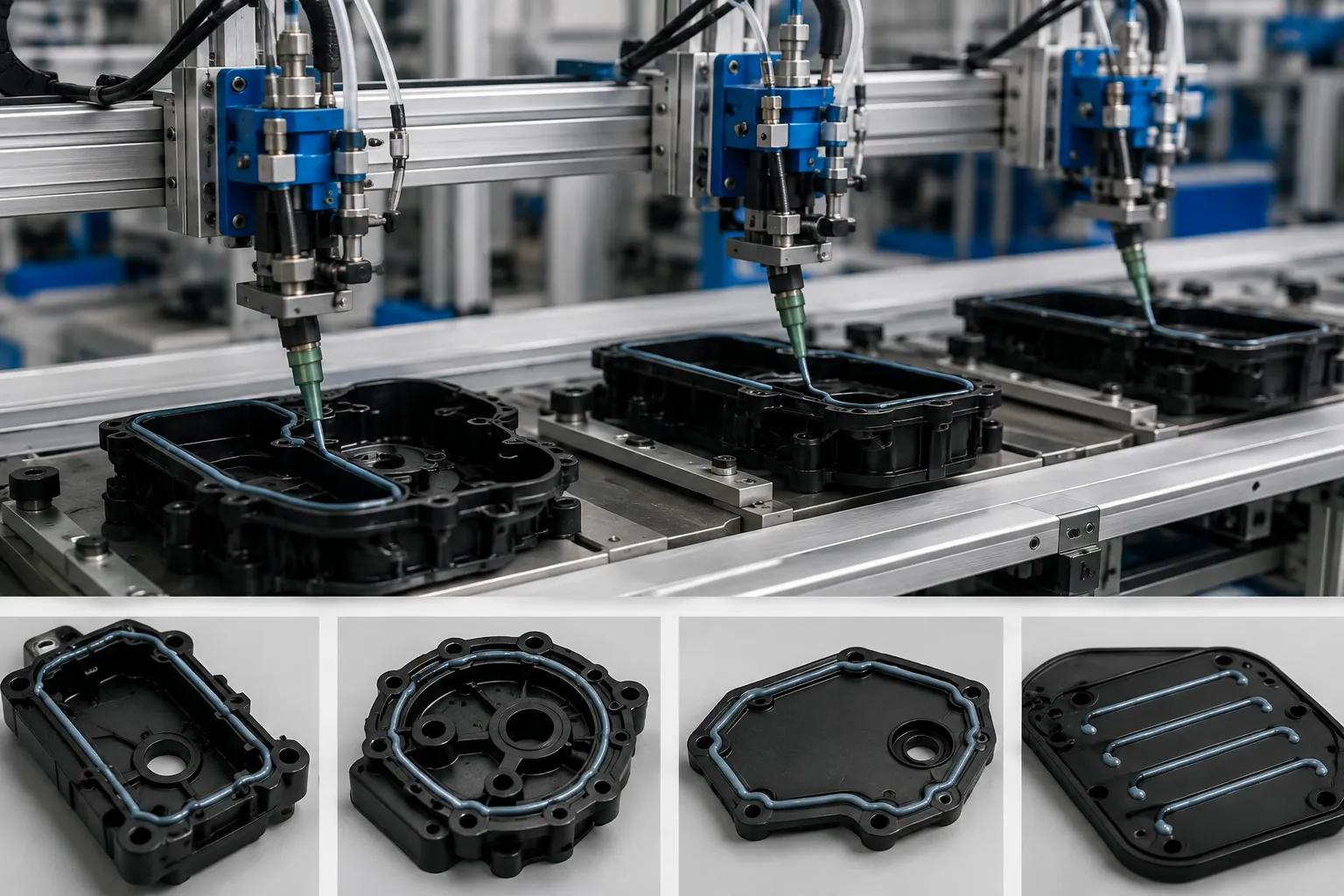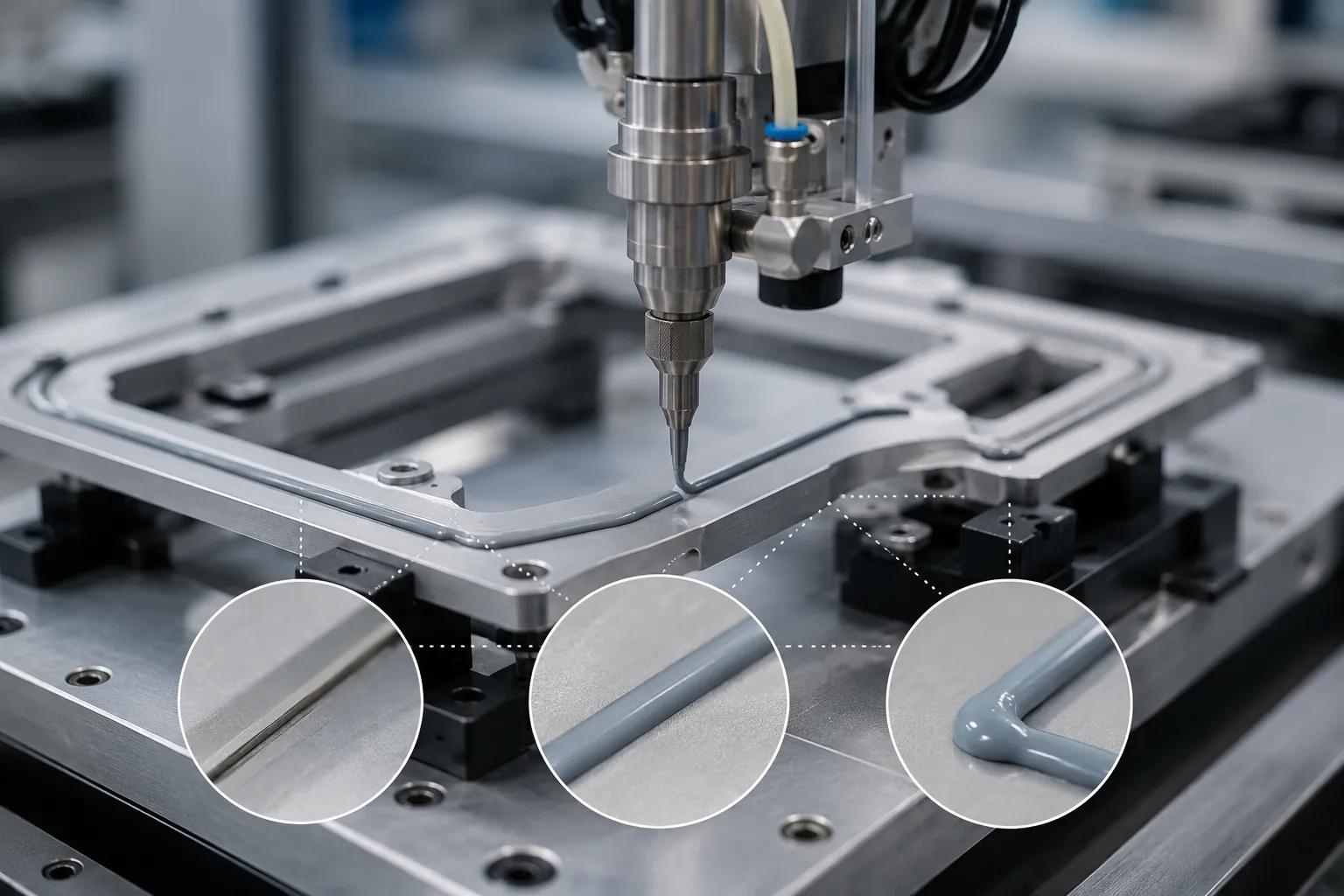



Electronic glue dispensing machine is an industrial automation system designed to accurately dispense adhesives, sealants, lubricants, and other high-viscosity fluids onto product surfaces with exceptional precision and consistent flow rates. As modern manufacturing demands higher productivity, repeatability, and product quality, automatic glue dispensing systems have become an indispensable part of assembly lines across various industries. With many years of experience in providing industrial automation solutions, AMC understands that selecting the right dispensing system is not merely a technical decision but also a strategic business investment that directly impacts material consumption, production efficiency, and final product quality. This article provides a comprehensive technical overview to help manufacturers choose the most suitable dispensing solution.
1. 1. What is an electronic glue dispensing machine?
An electronic glue dispensing machine is an automated or semi-automated system used to accurately meter and dispense adhesives, sealants, silicone, epoxy, polyurethane (PU), UV adhesives, thermal interface materials (TIM), and other liquid materials onto a product according to pre-programmed positions and dispensing volumes. Compared with manual dispensing methods, an electronic dispensing machine precisely controls dispensing volume, pressure, dispensing time, and application position. This significantly reduces material waste, minimizes production errors, and improves overall product consistency and manufacturing efficiency.
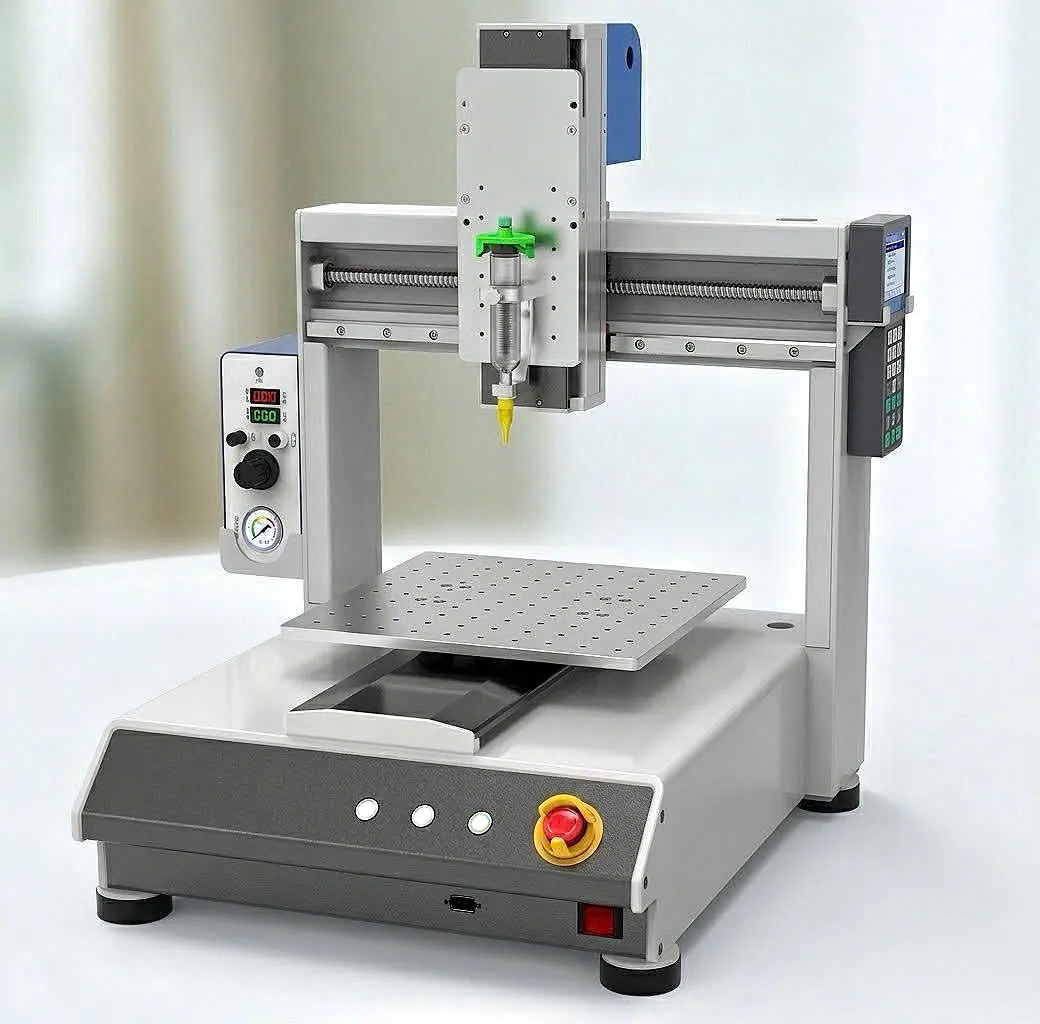
2. Basic structure of an electronic glue dispensing machine
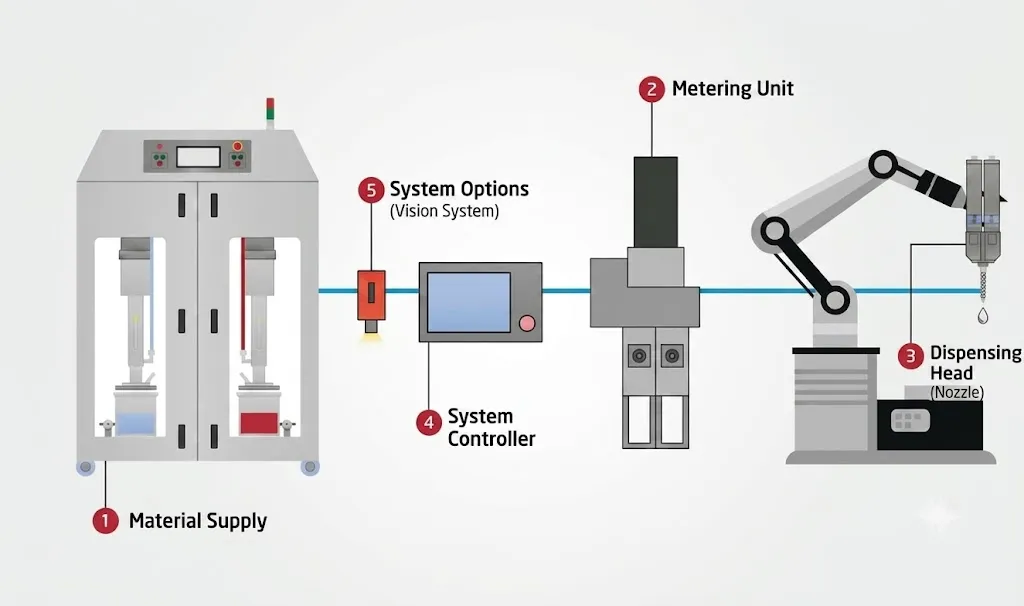
To achieve precise dispensing performance and stable material flow in industrial production, an electronic glue dispensing machine integrates multiple intelligent components. A complete dispensing system typically consists of the following major parts:
Controller
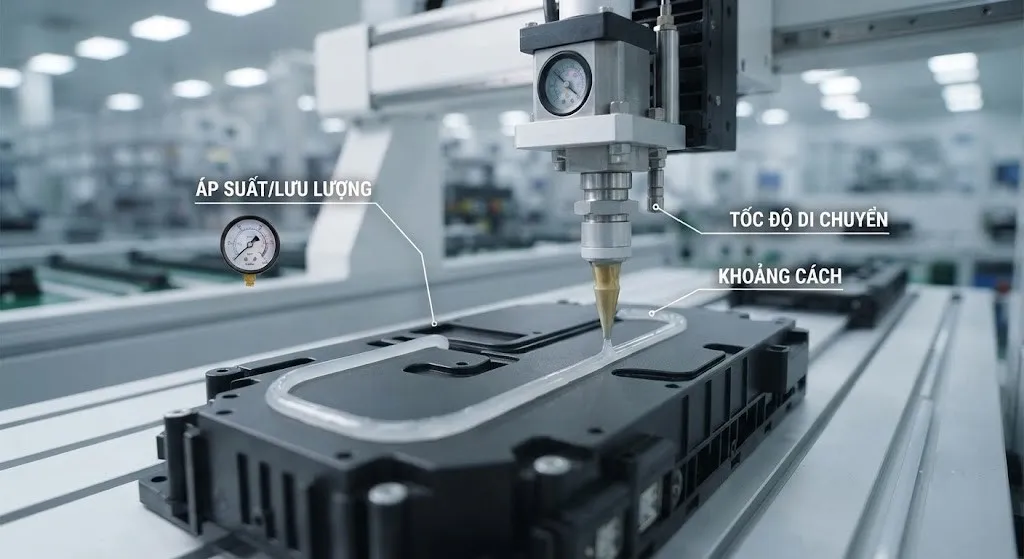
The controller serves as the "brain" of the electronic glue dispensing machine, managing and synchronizing the entire dispensing process. Through the control panel or PC-based software, operators can configure parameters such as travel speed, dispensing volume, valve opening and closing time, dispensing pressure, motion path, and many other operating settings. Modern systems can also store multiple dispensing programs, allowing manufacturers to switch quickly between different products while reducing setup time during production changeovers.
Dispensing Valve System
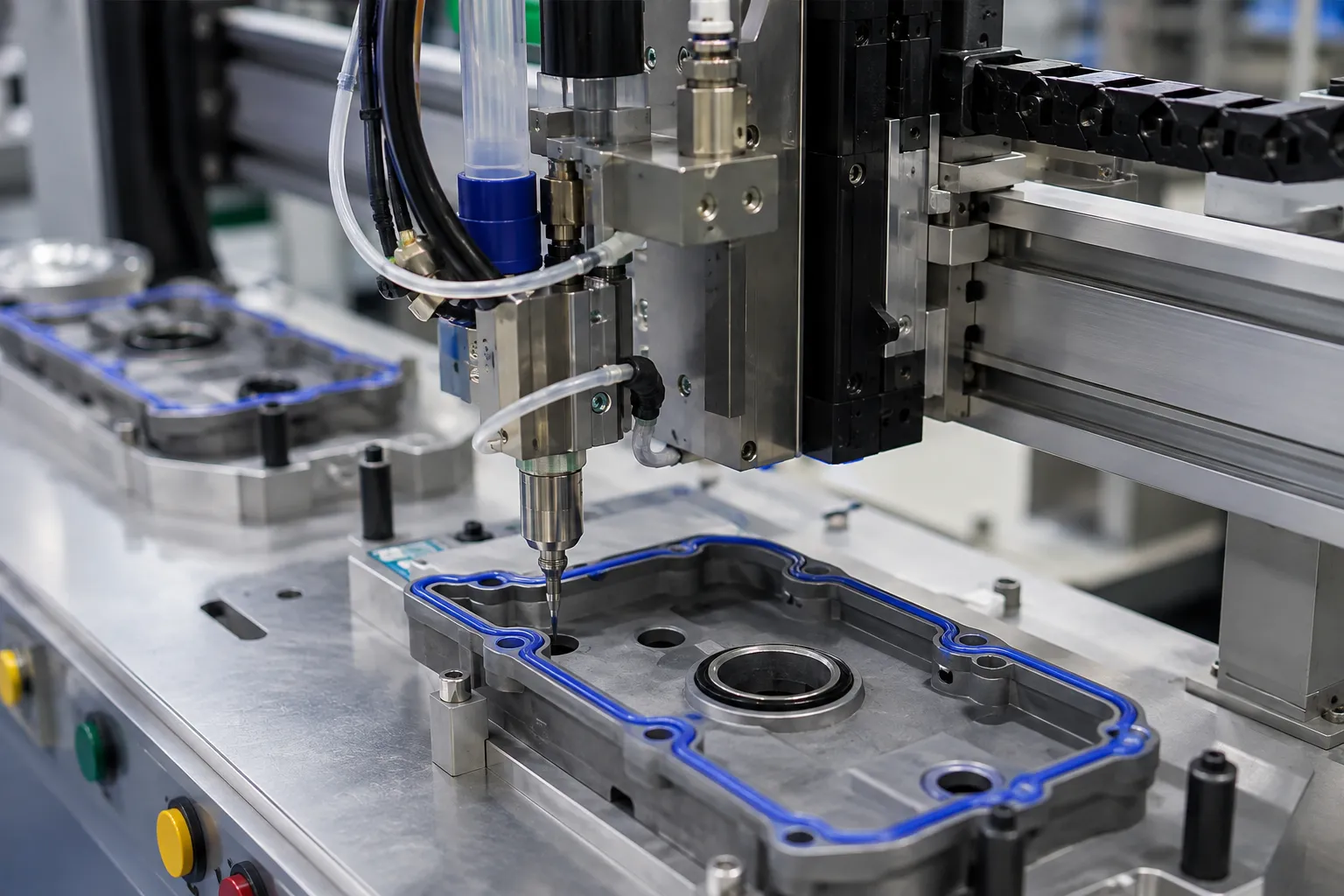
The dispensing valve determines when the adhesive is released and controls the amount of material dispensed during each cycle. It is one of the key components that directly affects the accuracy of adhesive dots and beads while minimizing dripping and stringing after dispensing. Depending on the material properties and production requirements, different types of valves may be used, including Needle Valves, Dispensing Valves, Screw Valves, and Jet Valves to achieve the required dispensing speed and precision.
Dispensing Needle and Nozzle
The dispensing needle is the component that comes into direct contact with the workpiece and delivers adhesive precisely to the target location. The nozzle size, orifice diameter, and material are selected according to the adhesive viscosity and the required dot or bead dimensions. Choosing the appropriate dispensing nozzle not only improves dispensing accuracy but also helps reduce material waste and enhance product quality.
Motion System
The motion system ensures that the dispensing head moves accurately according to the programmed path. For standard applications, the machine typically adopts a three-axis X-Y-Z motion system to perform dispensing operations on the product surface. For products with more complex geometries or applications requiring dispensing from multiple angles, multi-axis robotic systems are used to provide greater flexibility and a wider operating range.
Material Supply System
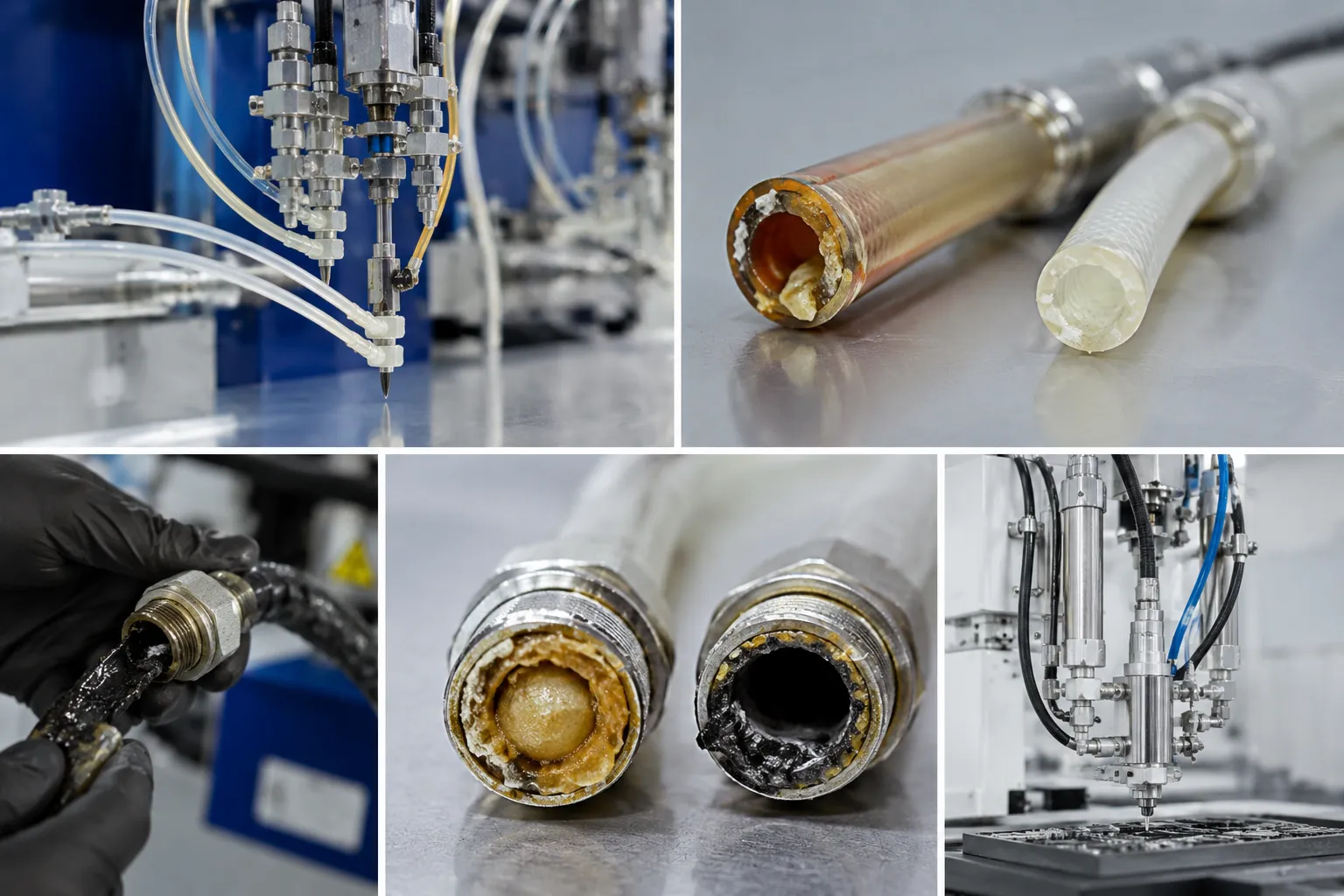
The material supply system continuously delivers adhesive to the metering pump or dispensing valve. Depending on the material properties and production requirements, the electronic glue dispensing machine may use cartridges, syringes, pressure tanks, or automatic material feeding systems. Selecting the appropriate supply method helps maintain stable pressure, reduce air entrapment, minimize production interruptions, and ensure consistent dispensing quality.
3. Working principle of an electronic glue dispensing machine
An electronic glue dispensing machine operates based on a closed-loop control system, integrating mechanical, pneumatic, electronic, and software technologies to ensure that adhesive is dispensed at the correct location, in the correct amount, and with consistent repeatability throughout every production cycle.
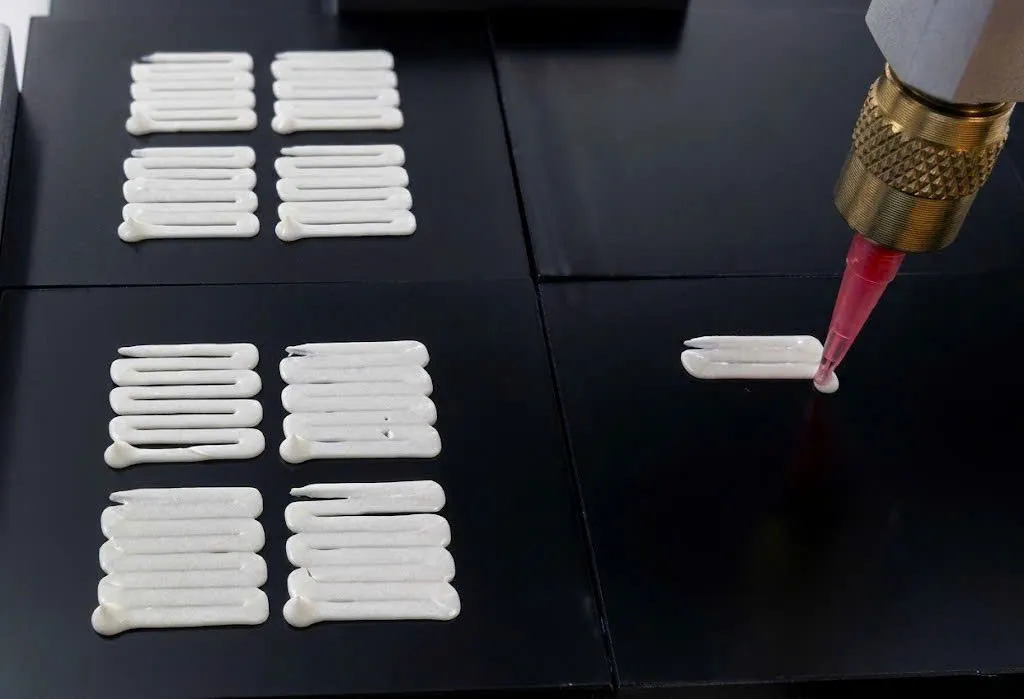
Step 1 – Material Loading and Pressure Stabilization
The adhesive is first loaded into a syringe, cartridge, or pressure barrel. Before dispensing begins, the system stabilizes the material pressure to ensure a continuous and consistent adhesive flow. For two-component (2K) adhesives, two independent cylinders feed the materials into a mixing nozzle immediately before dispensing. Even a slight deviation in the mixing ratio can significantly affect the mechanical properties of the cured adhesive.
Step 2 – Program Setup
Engineers configure the dispensing parameters by creating or selecting a recipe stored in the machine's memory. Parameters such as dispensing pressure, valve opening time, travel speed, Z-axis offset, and dispensing path are programmed according to the production requirements. The software can store hundreds of recipes, allowing manufacturers to switch efficiently between different products, which is especially valuable in high-mix production environments.
Step 3 – Adhesive Metering and Dispensing
This stage determines the dispensing accuracy of the machine. Depending on the system design, the dispensing process generally follows one of two operating principles.
Pressure-Time Dispensing: Compressed air pushes the adhesive through the dispensing valve for a preset period. This method features a simple structure and relatively low cost but is more sensitive to changes in adhesive viscosity caused by temperature fluctuations.
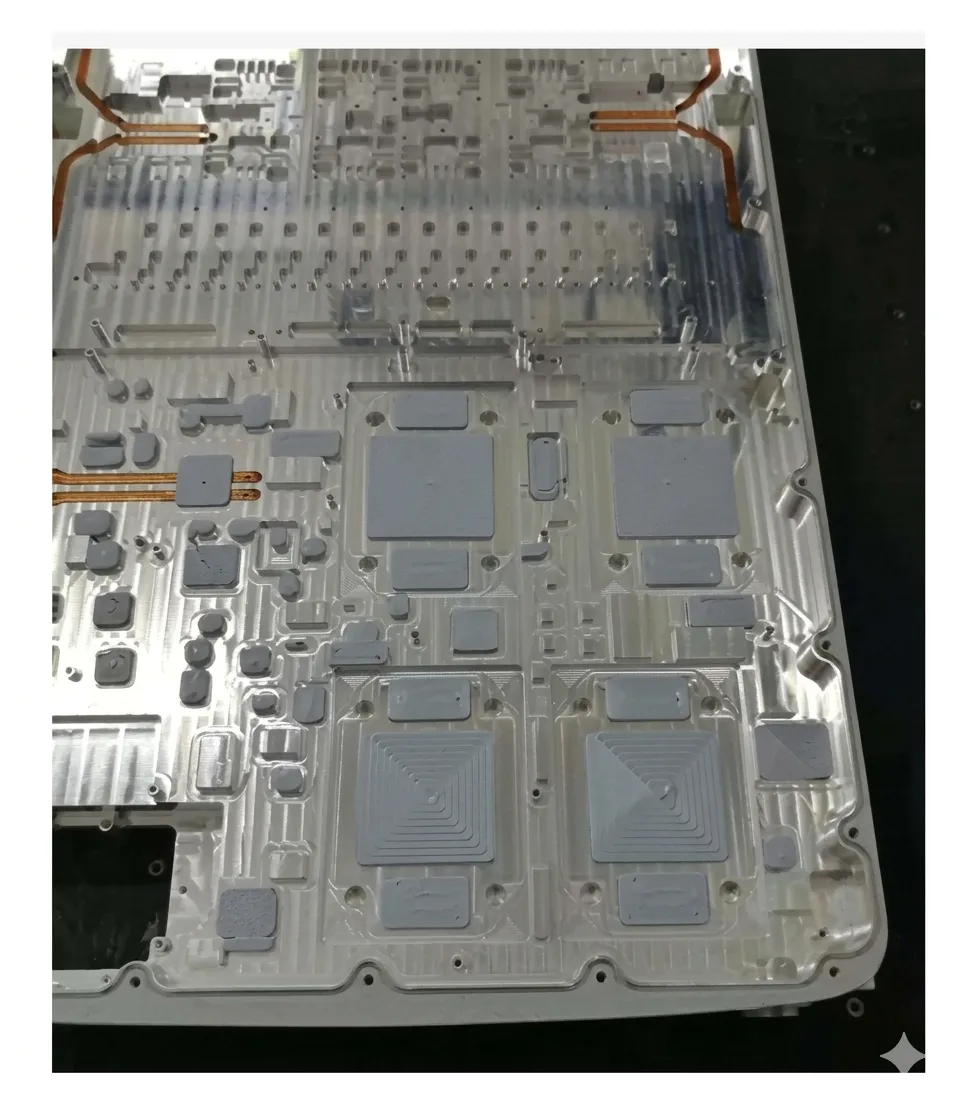
Volumetric Dispensing (Auger/Piston): A screw pump or piston pump dispenses a fixed volume of adhesive during each cycle. This method offers higher dispensing accuracy and is commonly used for thermal interface material (TIM) dispensing in electric vehicle battery assembly.
Step 4 – XYZ Motion System Executes the Dispensing Path
Servo motors drive the XYZ motion system to move the dispensing nozzle along the programmed path with a repeatability of ±0.01–0.05 mm. Modern automatic glue dispensing machines feature dynamic speed compensation. As the dispensing head slows down when approaching corners or changing direction, the dispensing pressure is automatically adjusted to ensure a uniform adhesive bead throughout the entire dispensing path, including complex curves and irregular shapes.
Step 5 – Cycle Completion
After each dispensing cycle, the automatic glue dispensing machine sends an I/O signal indicating that the process has been completed, allowing the production line to receive the next workpiece. High-end dispensing systems also perform automatic purging and adhesive retraction after each cycle to prevent dripping, one of the most common causes of cosmetic defects and short circuits in PCB dispensing applications.
4. Applications of electronic glue dispensing machines in industry
Electronics and PCB Manufacturing:
Electronic glue dispensing machines are widely used for dispensing protective coatings on electronic components, conformal coating for printed circuit boards (PCBs), chip bonding, and SMT component fixation. Their high dispensing accuracy helps improve product reliability while protecting sensitive electronic components from vibration, moisture, and environmental contaminants.
Automotive and Electric Vehicle Manufacturing
In the automotive industry, electronic glue dispensing machines are commonly used for gasket sealing, plastic component bonding, anti-vibration adhesive application, lithium battery pack assembly, and electronic control unit (ECU) manufacturing. By precisely controlling the dispensing volume and position, manufacturers can ensure consistent bonding quality while reducing adhesive consumption and production costs.
Medical Industry
Glue dispensing machines are extensively applied in the production of diagnostic equipment, syringes, medical sensors, and various single-use medical components. Their high precision and repeatability help manufacturers meet the strict quality standards required by the medical industry.
New Energy IndustryManufacturers of lithium batteries, energy storage systems, and photovoltaic modules rely on automatic glue dispensing systems to achieve reliable sealing, effective thermal management, and long-term product durability. Accurate adhesive dispensing is particularly critical for battery modules, where consistent material application directly affects product performance and safety.
Electronic glue dispensing machines are no longer optional equipment but have become essential infrastructure in modern manufacturing, from electronics and semiconductor production to automotive and medical device assembly. Choosing the right dispensing system enables manufacturers to control material costs, improve production efficiency, and meet increasingly demanding quality standards. If you are looking for an automatic glue dispensing solution tailored to your manufacturing process, AMC is ready to provide professional consultation and customized solutions to optimize production efficiency and enhance your competitive advantage.